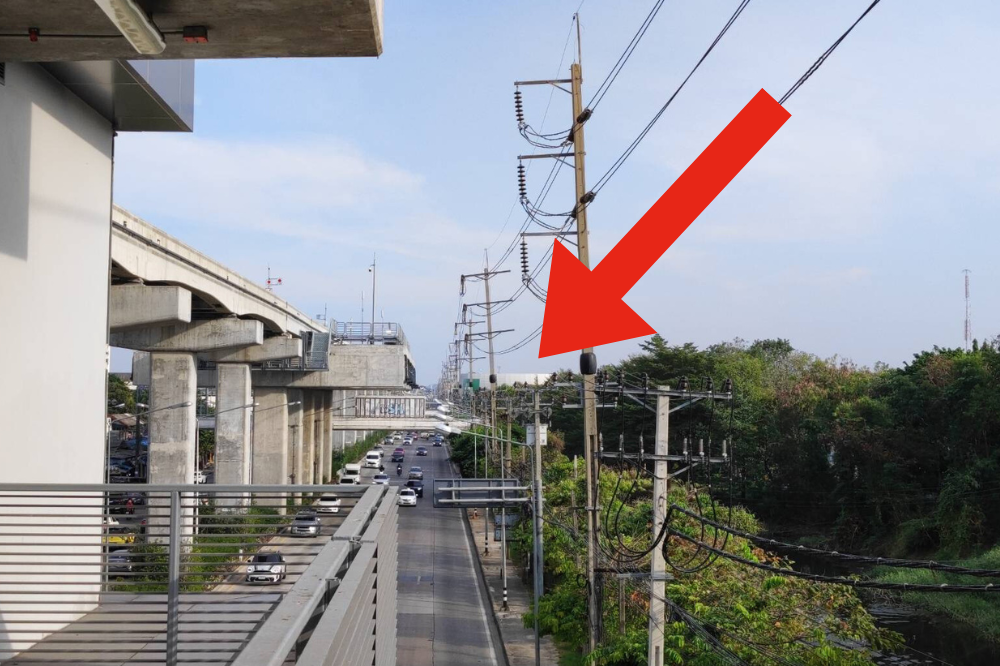
Getting to Lumpinee Stadium has become a lot easier now that the MRT Pink Line runs next to the arena. Just get off the MRT at the Ram Inthra 3 station, also known as PK17. From there, follow the signs for Exit 2, walk down to street level, and head southeast on Ram Inthra Road toward Lumpinee. The stadium is about 750 meters from the MRT Ram Inthra 3 station and takes 10 minutes on foot.
For more specific details on how to get to and from Lumpinee Stadium using the MRT Pink Line, continue reading.
About this guide: I’ve compiled this guide based on my firsthand experience with traveling to and from Lumpinee Stadium between 2014 and 2026 as a fan and an English-Language commentator for shows like Fairtex Fight and LWC Super Champ.
While this guide covers getting to the arena using the Pink Line, you should check out my in-depth guide to choosing the best seats at Lumpinee Stadium to get best views once you arrive.
Good to know: Since the start of 2026 the MRT Blue and Pink Lines have been phasing out old cards. You don’t need to wait in line anymore. Just tap your international contactless Visa or Mastercard at the silver gate readers. But the BTS Green Line still requires a Rabbit Card or a physical ticket. It doesn’t accept international credit cards at the gate yet.
Safety And Sidewalk Conditions When Walking To And From Lumpinee Stadium
Bangkok isn’t known for its sidewalk safety, but I’ve walked Ram Inthra Road dozens of times to get to Lumpinee and never had a bad experience — aside from the scorching heat.
Insider tip: Although the walk to Lumpinee Stadium is only 750 meters, you should bring a portable fan and bottle of water to keep you cool and an umbrella to keep you dry during Thailand’s rainy season, which starts in June and lasts til October.
The sidewalk is made of concrete tiles, which do tend to loosen up from foot and motorbike traffic. Be careful of your footing to avoid a twisted ankle or a splash of muddy water during the rainy season. The Bangkok Metropolitan Administration (BMA) upgrades the sidewalks around Bangkok every year, so you might get lucky and touchdown on Ram Inthra Road when it’s newly paved.
Is it safe to walk at night? Yes. Because Lumpinee and the surrounding area are owned by the Royal Thai Army, the area is safe to walk at all hours, even after late-night ONE Friday Fight/ONE Lumpinee events.
Taking The MRT Pink Line To Lumpinee Stadium
Getting to Lumpinee Stadium via the MRT Pink Line is straightforward. First, you have to get the Pink Line from where you are. Below are a few popular starting points.
From Sukhumvit. If you’re close to a BTS station, take it to BTS Wat Phra Sri Mahathat station. From there, you can use the skywalk to transfer to the MRT Wat Phra Sri Mahathat station and take the Pink Line to Ram Inthra 3 station. It’s only one stop down the road so be sure you don’t miss it.
From Sathorn. If you’re close to the MRT Blue Line, take it all the way to Chatuchak Park to transfer to the BTS at Mo Chit — it’s a much smoother interchange than the crowded Asok station. Once on the BTS, take it to Wat Phra Sri Mahathat station. Use the skywalk to transfer onto the MRT Pink Line and take it Ram Inthra 3. Alternatively, if you’re on the BTS Silom Line, transfer at Siam and head north to Wat Phra Sri Mahathat.
The Red Line. If you’re anywhere near the Red Line, take that to the Lak Si station. Then transfer to the MRT Pink Line and take that to Ram Inthra 3 station.
You can pay for the MRT Blue Line and Red Line using your contactless tap and pay credit card. But for the BTS Green Line you need to buy a card. On a Friday afternoon, when work gets out and people are heading into the city, the lines to buy cards can get quite long. You might even have to wait in line to catch a train.
Insider tip: If you want to avoid Friday rush hour crowds on the BTS and MRT, leave around 3:00 PM, arrive at Lumpinee early, then kill some time at Central Ramindra Mall just down the road — the perfect place for some air conditioning. You can also browse the equipment shops at the stadium or grab some food from the food trucks and stalls outside that usually open at 4:30 PM.
Taking The MRT Pink Line From Lumpinee Stadium
If you go to a ONE Friday Fights/ONE Lumpinee event, the show usually ends at 11:30 PM. This means that by the time you shuffle out of the stadium and walk back to MRT Ram Inthra 3 station, you might just make the last train. While the last car hits the platform around 12:30 AM, the station gates often close right at midnight, so don’t cut it too close.
But what if the event runs past midnight? This sometimes happens if there were no early knockouts. If this is the case, keep an eye on your watch and leave Lumpinee at 11:40 PM to give yourself enough time to make it to the station.
If the fights are running late and you want to watch the entire event, you’ll have two options. First, outside the stadium you can compete for a standard taxi, some of which try to overcharge passengers by not turning on the meter. Or second, you can book a Grab — a better option if you don’t want to haggle with taxi drivers and don’t mind the minimal markup in price.
Insider Tip: Reserve a Grab ahead of time if you know you’re not going to make it to MRT Ram Inthra 3 station before midnight. Otherwise you’ll be competing with thousands of other spectators trying to do the same thing.
Now that you know how to get to and from the arena, check out my other guides to Lumpinee Stadium:
Lumpinee Boxing Stadium Series
After you read this guide be sure to check out all the other guides in this series.
- Part 1: Lumpinee Boxing Stadium: Ticket Prices, Best Seats, Fight Schedule, And More
- Part 2: How To Pick Best The Seats At Lumpinee Stadium
- Part 3: ONE Lumpinee: Ticket Prices, Best Seats, Event Schedule, And More
- Part 4: Lumpinee Stadium Vs. Rajadamnern Stadium: Which Is Better?
- Part 5: Lumpinee Stadium Dress Code: What To Wear And What To Avoid
- Part 6: The Best Day To Watch Muay Thai Fights At Lumpinee Stadium
- Part 7: How To Get To Lumpinee Stadium Using The MRT Pink Line
- Part 8: ONE Lumpinee Vs. ONE Friday Fights Vs. ONE Fight Night: What’s The Difference?
